 Balinder Walia
Le paysage de l’infrastructure IA évolue vite. Les équipes qui construisent des pipelines RAG, de la recherche sémantique et des applications intelligentes font face à un choix fondamental : adopter une base de données AI-native généraliste que vous contrôlez, ou payez-vous pour une plateforme de mémoire d’agents qui gère l’infrastructure pour vous ?
Ce billet compare NebulaDB — notre base hybride AI-native open source propulsée par Rust — face à la catégorie émergente des plateformes de mémoire d’agents (services SaaS qui fournissent mémoire persistante, récupération de contexte et état temporel pour agents IA). L’analyse complète est disponible en article complet ; ici nous couvrons les points clés.
Qu’est-ce que NebulaDB ?
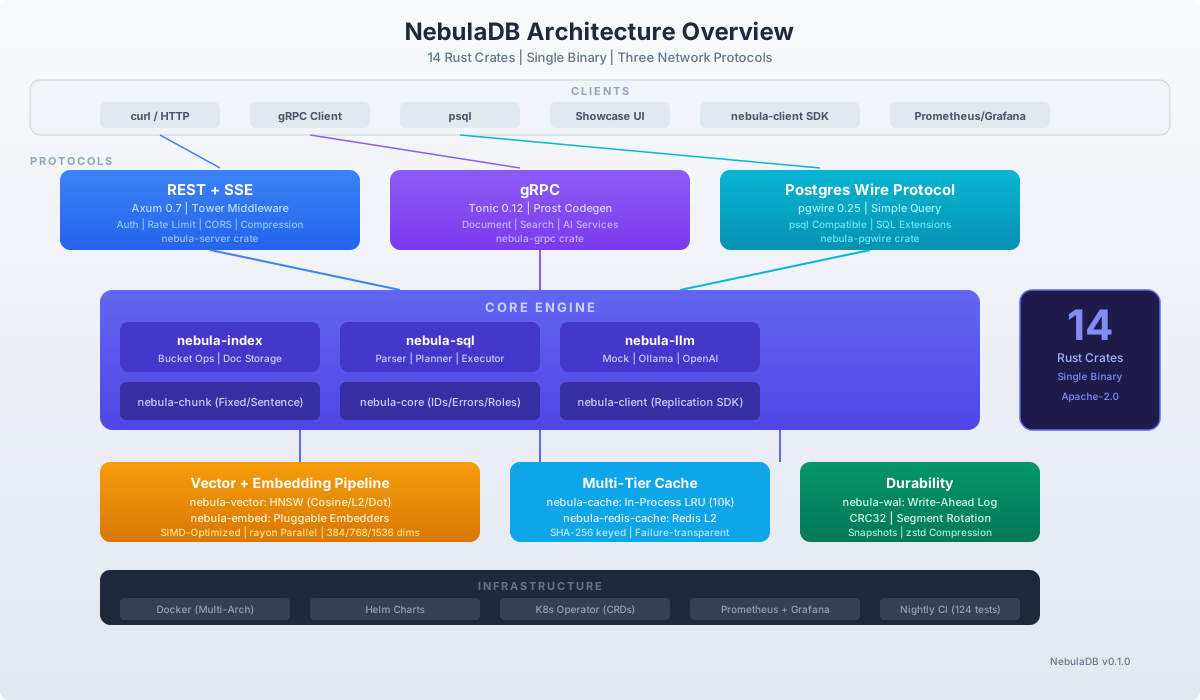
NebulaDB est une base de données hybride AI-native qui combine stockage documentaire, recherche vectorielle (HNSW), requêtes SQL avec extensions IA et RAG en streaming — le tout dans un seul binaire Rust. Sous licence Apache-2.0, elle se livre en self-hosted avec Docker, charts Helm et un Operator Kubernetes complet.
Capacités clés en un coup d’œil
- Trois protocoles depuis un seul binaire : REST+SSE (Axum), gRPC (Tonic), protocole wire Postgres
- Index vectoriel HNSW : Distances cosinus, L2 et produit scalaire avec optimisation SIMD
- SQL avec extensions IA :
semantic_match()etvector_distance()comme fonctions SQL de premier plan, plus GROUP BY, JOIN et agrégats - RAG en streaming : Server-Sent Events avec chunks de contexte avant les tokens de réponse — génération temps réel
- Pipeline complet : Ingest → Chunk → Embed → Index → Search → Generate dans un seul système
- Cache multi-niveaux : LRU in-process (10 000 entrées) + Redis optionnel avec fallback transparent aux pannes
- Durabilité WAL : write-ahead log vérifié CRC32 avec recovery par snapshot et compression zstd
- Natif Kubernetes : CRDs pour NebulaCluster, NebulaBucket et NebulaRebalance via un operator dédié
- Prêt pour la production : 124 tests, CI nightly, images Docker multi-arch, observabilité Prometheus + Grafana
Que sont les plateformes de mémoire d’agents ?
Les plateformes de mémoire d’agents sont une catégorie plus récente de services SaaS propriétaires conçus pour fournir une infrastructure de mémoire persistante et de contexte pour les agents IA. Elles offrent en général des graphes de connaissances temporels, des ledgers d’état immuables et des couches de contexte partagé pour les systèmes multi-agents. L’accès se fait surtout via APIs REST et SDKs, avec des tarifs à partir de 249 $/mois jusqu’à 5 000 $+ pour l’entreprise.
La comparaison : pourquoi NebulaDB gagne
Voici comment NebulaDB se positionne face aux plateformes de mémoire d’agents sur les dimensions qui comptent le plus :
| Dimension | NebulaDB | Plateformes managées |
|---|---|---|
| Licence | Apache-2.0 (gratuit) | Propriétaire (249 $-5k+ $/mois) |
| Écrit en | Rust (open source) | Inconnu (closed-source) |
| Interfaces de requête | REST, gRPC, Postgres, SQL | API REST, SDKs |
| Index vectoriel | HNSW (optimisé SIMD) | Propriétaire |
| Intégration LLM | RAG streaming intégré | Récupération de contexte seulement |
| Observabilité | Prometheus + Grafana | Non documenté |
| Déploiement | Docker, Helm, Operator K8s | SaaS ou self-host entreprise |
Cadre de décision
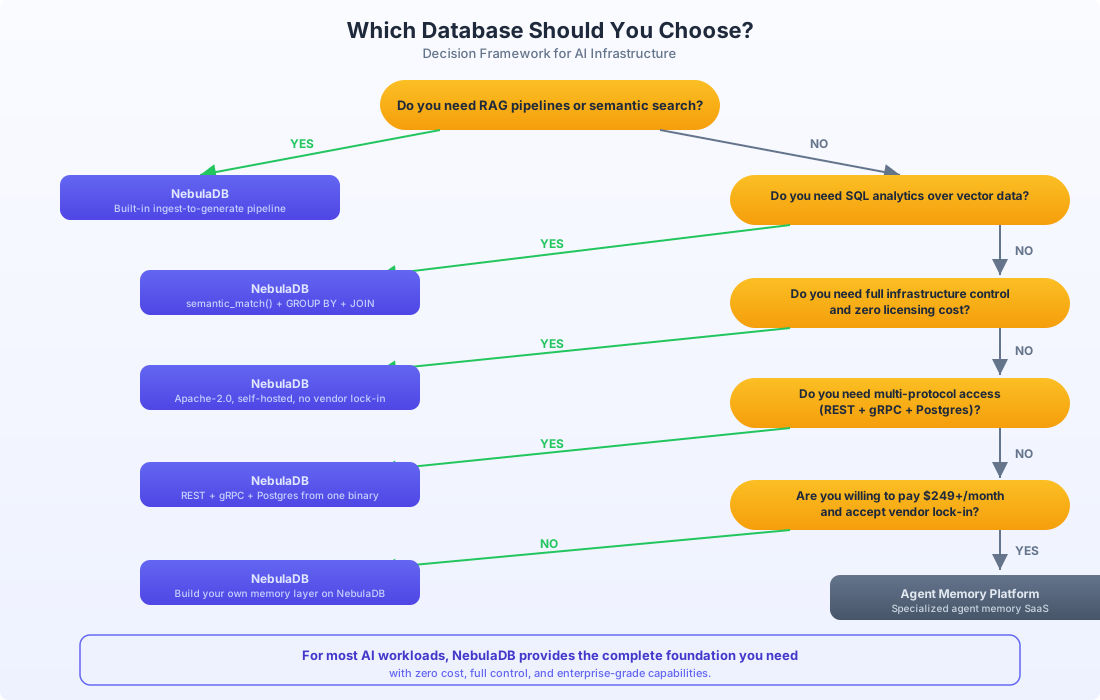
Choisissez NebulaDB si vous :
- Voulez un contrôle total de votre infrastructure sans vendor lock-in
- Construisez des pipelines RAG avec réponses LLM en streaming
- Avez besoin d’accès multi-protocoles (REST + gRPC + Postgres depuis un seul binaire)
- Voulez de l’analytique SQL sur votre corpus vectoriel (GROUP BY, JOIN avec filtres sémantiques)
- Vous souciez du coût — NebulaDB est gratuit et open source
- Avez besoin d’observabilité production (Prometheus, Grafana, tracing)
- Voulez un pipeline complet : ingest → chunk → embed → index → search → generate
Les plateformes managées peuvent convenir si vous :
- Construisez des agents IA stateful qui ont besoin de mémoire persistante cross-session
- Avez besoin de raisonnement temporel (« que préférait l’utilisateur le mois dernier vs maintenant ? »)
- Avez des systèmes multi-agents nécessitant des couches de contexte partagé
- Préférez zéro charge ops et acceptez de payer 249 $+ / mois
Conclusion
Pour la plupart des charges IA — pipelines RAG, recherche sémantique, retrieval de documents, analytique SQL sur embeddings — NebulaDB livre des capacités de niveau entreprise à coût zéro avec un contrôle total de l’infrastructure. Sa base Rust assure performance et sûreté, tandis que l’architecture à trois protocoles (REST, gRPC, Postgres wire) permet d’intégrer vos outils et workflows existants sans friction.
Les plateformes de mémoire d’agents servent une niche plus étroite : les équipes qui construisent des agents conversationnels stateful qui ont besoin de raisonnement temporel et acceptent le lock-in vendeur et des coûts récurrents. Même pour ces cas, le replay d’événements basé WAL et l’architecture extensible de NebulaDB offrent une alternative self-hosted viable.
Lisez le article de comparaison complet pour des deep-dives d’architecture, des exemples d’API et une analyse détaillée sur 15+ dimensions.